








Flame Retardants Commonly Used in Plastic Products on the Market
- Postdate: 2023-02-21
- From: qibochem.com
-
Flame Retardants Commonly Used in Plastic Products on the Market
- Postdate: 2023-02-21
- Form: qibochem.com
-
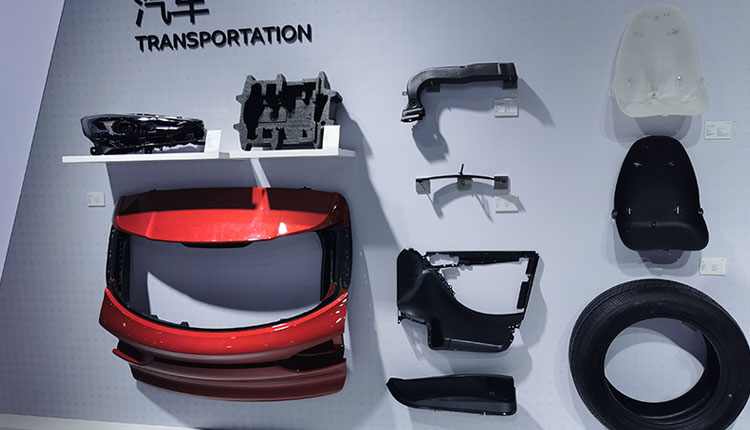
Most plastics are flammable. With the wide application of plastics in construction, furniture, transportation, aviation, aerospace, electrical appliances and so on, improving the flame retardancy of plastics has become a very urgent topic.This article mainly introduces four common flame retardants in plastics.
1 PP high-efficiency flame retardant
PP high-efficiency flame retardant is a new type of high-efficiency reactive flame retardant containing Br, P, N and other elements made of imported materials.Compared with traditional additive brominated flame retardants (decabromodiphenyl ether, tetrabromobisphenol A, octabromoether, octabromobis-S ether, TBC, etc.), the addition amount is less, and the flame retardant effect is good, no need to add antimony trioxide, low bromine content (almost can meet the requirement of halogen-free in the modified product).At the same time, the flame retardant also has excellent processing thermal stability, no precipitation, water resistance, aging resistance, non-toxic and other characteristics.
2 Brominated flame retardant
Most brominated flame retardants will decompose at 200-300°C, which happens to be the decomposition temperature range of polypropylene, so when polypropylene is heated and decomposed, brominated flame retardants will also start to decompose, and at the same time capture its degradation Free radicals generated by the reaction, thereby delaying or terminating the chain reaction of combustion.The HBR released at the same time of decomposition is a kind of difficult-to-flammable gas. This gas has a high density and can cover the surface of the material to block the combustible gas on the surface and inhibit the combustion of the material.
The main disadvantage of brominated flame retardants is to reduce the anti-ultraviolet stability of the flame-retardant substrate, and generate more smoke, corrosive gases and toxic gases during combustion, which limits its application to a certain extent.
 3 Phosphorus flame retardant
The flame retardant function of phosphorus-based flame retardants is to promote the dehydration and carbonization of the polymer during the initial decomposition. This dehydration carbonization step must rely on the oxygen-containing groups of the polymer itself.For polymers with oxygen-containing groups in their structure, their flame retardant effect will be better. For polypropylene, since its molecular structure has no oxygen-containing groups, the flame retardant effect is not good when phosphorus-based flame retardants are used alone, but if they are compounded with (OH)3 and Mg(OH)2, etc. A synergistic effect is produced, resulting in a good flame retardant effect.
But its weakness is firstly manifested in the fact that the color must be red or matched with black, which greatly limits its application in many materials. In addition, although red phosphorus has been coated, it may inevitably cause "fire" during use due to various reasons limited to the process and raw materials. What is more serious is that the processing characteristics of red phosphorus are relatively poor, and the compatibility with resin The capacity is not very good, the mechanical properties of the processed materials are very poor, and the smell of "stinky" in the production process makes it difficult to promote it in high-end materials.
4 Phosphorus-nitrogen flame retardant
Phosphorus-nitrogen flame retardants are also called intumescent flame retardants. When polymers containing such flame retardants are heated, a uniform carbon foam layer can be formed on the surface, which plays a role in heat insulation, oxygen insulation, and smoke suppression. The role, and to prevent the droplet phenomenon, so it has good flame retardant properties.The intumescent flame retardant system generally consists of three parts: acid source (dehydrating agent), carbon source (carbon forming agent) and gas source (nitrogen source, foaming source). Intumescent flame retardants play a flame retardant role mainly by forming a porous foam carbon layer during condensation. Phosphorus-nitrogen flame retardants have the advantages of no halogen, low smoke and low toxicity.
Shijiazhuang Qibo Chemical Co., Ltd. is a large-scale high-tech enterprise dedicated to the research, development, production and sales of plastic flame retardant. There are 2 production bases in Hebei and Shandong, and 2 sales companies in Guangdong and Zhejiang.