







What is Nylon
- Postdate: 2023-03-15
- From: qibochem.com
-
What is Nylon
- Postdate: 2023-03-15
- Form: qibochem.com
-
1 Introduction
Nylon (Nylon,Polyamide,) refers to a plastic composed of polyamide resins,usually referred to by the chemical name "PA" (such as PA 6 or PA 66). This kind of resin can be prepared by polycondensation of diamine and dibasic acid,or by ring-opening polymerization of lactam formed after dehydration of amino acid. It is a general term for resins containing repeated amide groups -NHCO- in the molecular chain. Unlike PS,PE,PP,etc.,PA does not gradually soften with the increase of heating temperature,but softens in a narrow temperature range close to the melting point,and the melting point (215-225 ° C) is obvious. Flow occurs once the temperature is reached.
Nylon is most commonly found in black,white,and natural (off-white or beige). Probably the most common variant in engineering applications is PA6. PA6 can be extruded (melted and forced through a nozzle),so it is a good plastic for both injection molding and 3D printing. It has a high melting temperature,making it an ideal replacement for metals in high-temperature environments such as automotive under-hood components. The disadvantage of this material is its relatively low impact strength.
2 Nylon application
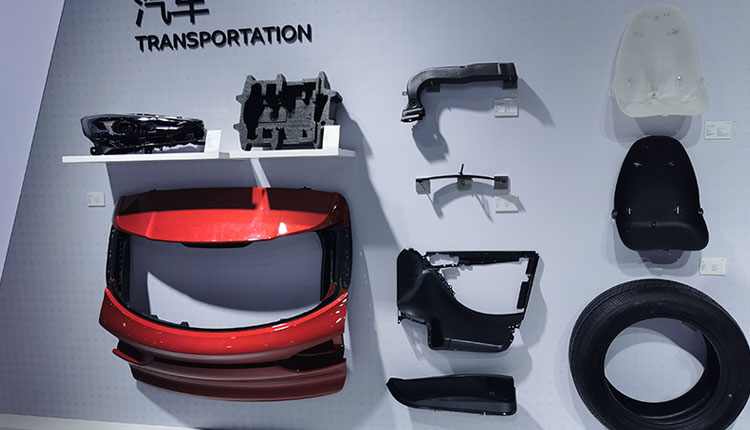
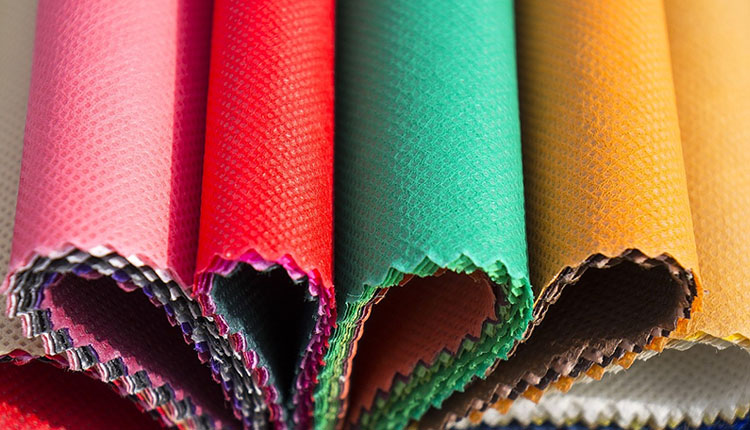
Nylon is used in a variety of applications,including clothing,reinforcements for rubber materials such as tires,ropes,and plastic parts for vehicles and machinery. It has excellent strength,relatively good wear resistance and moisture absorption,long service life,chemical resistance,elasticity,and easy cleaning. Nylon is often used as a substitute for low-strength metals. It is the plastic of choice for vehicle under-hood components due to its good strength,heat resistance and chemical compatibility.
Nylon can also be combined with various additives to produce different variants with significantly different material properties. (This is what a composite gear made of nylon and carbon would look like)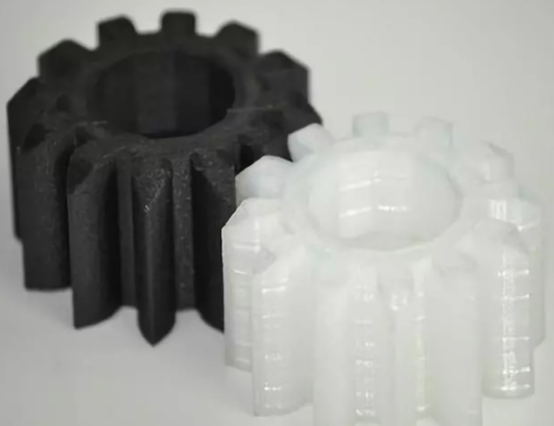
3 What are the characteristics of nylon
Nylon is a condensation copolymer consisting of several different monomer types combined with each other. It can be produced in a number of ways,usually starting from the distillation of crude oil,but also from biomass (Biomass).
Based on how the plastic reacts to heat,nylon is classified as a "thermoplastic" material (as opposed to "thermoset"). Thermoplastics become liquid at their melting point (PA is 220 degrees Celsius). A key property of thermoplastics is that they can be heated to their melting point,cooled and reheated without significant degradation. Nylon heats to liquefy rather than burn,so it can be easily injection molded and recycled.
4 What are the disadvantages of nylon
Although nylon has a high melting temperature,it does not withstand open flames well. It is a flammable material and will burn easily if exposed to an open flame. Flame retardants can be added to nylon to improve flame retardancy. For example,nylon used for manifolds has the highest flame retardant rating (V0) through the addition of flame retardants.
Nylon is also negatively affected by UV rays in direct sunlight. For this reason,UV stabilizers are often added to the material before the part is injection molded.
Shijiazhuang Qibo Chemical Co.,Ltd. specializes in the production of PP,PC,PE,PA,PET,ABS,PVC flame retardants for 16 years in China.We have PA66 GF30 flame retardant,PA66 GF30 flame retardant masterbatch,PA66 flame retardant and PA66 flame retardant masterbatch.