









What is High Melt Strength Polypropylene
- Postdate: 2023-03-07
- From: qibochem.com
-
What is High Melt Strength Polypropylene
- Postdate: 2023-03-07
- Form: qibochem.com
-
One of the disadvantages of polypropylene is its low melt strength and poor sag resistance. Generally, amorphous polymers (such as ABS, PS) have rubber-like elastic behavior in a wide temperature range, while semi-crystalline polypropylene does not. This shortcoming prevents polypropylene from being thermoformed in a wide temperature range. Its softening point and melting point are very close. The uneven wall thickness of the product during molding, extrusion foaming, cell collapse and other problems greatly limit the application of polypropylene in some aspects. High melt strength polypropylene (HMSPP) refers to polypropylene whose melt strength is less sensitive to temperature and melt flow rate.
HMSPP is a resin containing polypropylene with long chain branches, which are grafted after initiation of polymerization. The melt strength of this homopolymer is 9 times that of ordinary polypropylene homopolymer with similar flow characteristics. , In the case of similar density and melt flow rate, the yield strength, flexural modulus, heat distortion temperature and melting point of HMSPP are higher than ordinary polypropylene, but the notched impact strength is lower than ordinary polypropylene.
Another feature of HMSPP is that it has a higher crystallization temperature and a shorter crystallization time, which allows thermoformed parts to be demolded at a higher temperature to shorten the molding cycle, and can be made into larger thermoforming equipment. Draw ratio, thin-walled container.
Under constant strain rate, the stress of melt flow of HMSPP increases gradually at first, and then increases exponentially, showing obvious strain hardening behavior. When strained, the extensional viscosity of ordinary polypropylene drops, while that of HMSPP remains stable. The strain hardening ability of HMSPP can ensure that it remains uniformly deformed when it is stretched, while ordinary PP always deforms from the weakest or hottest place in the structure when it is stretched, resulting in various defects in the product, or even failure to form.
At present, there are two main methods for the preparation of HMSPP: one is reactive modification of polypropylene and other compounds, and the other is blending modification of polypropylene and other polymers. The specific implementation methods mainly include ray radiation method, reactive extrusion method, initiation grafting method during polymerization, etc. In the process of preparing HMSPP, two major problems are faced: the degradation and gelation of polypropylene, and the competition between polymer grafting and monomer homopolymerization, polymer backbone β-bond breaking, and cross-linking and branching. competition.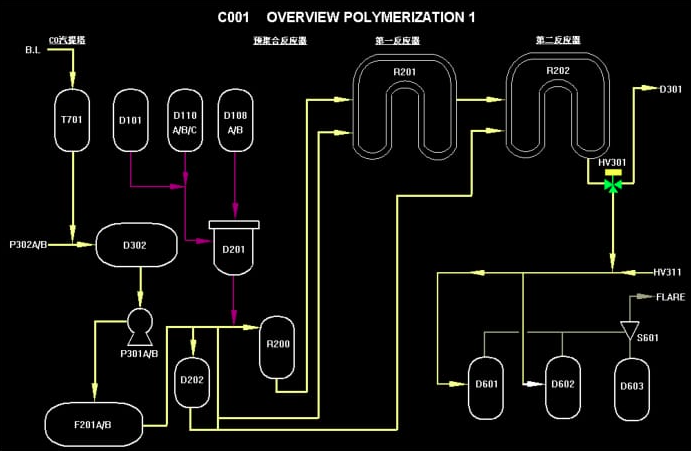
The main factor affecting the melt strength of polymer is its molecular structure. As far as polypropylene is concerned, the relative molecular mass and its distribution and whether it has a branched chain structure determine its melt strength. Generally, the larger the relative molecular mass, the wider the distribution, the greater the melt strength, and the long chain branch can obviously improve the melt strength of grafted polypropylene.
HMSPP special resin solves the difficult problem of ordinary polypropylene thermoforming, and can form thin-walled containers with large draw ratio on ordinary thermoforming equipment. The processing temperature range is wide, the process is easy to master, and the container wall thickness is uniform. It can be used to make microwave food containers and high-temperature cooking and sterilization containers. Ordinary polypropylene mixed with HMSPP has higher processing temperature and processing speed than pure ordinary polypropylene, and the transparency of the film produced is also better than ordinary polypropylene. This is mainly due to the fact that HMSPP has the characteristics of tensile strain hardening, and its long branch chain can refine the crystal nucleus.
The strain hardening behavior of HMSPP is the key factor to achieve high draw ratio and fast coating speed. Higher coating speeds and thinner coating thicknesses can be obtained with HMSPP. HMSPP has high melt strength and elongational viscosity, and its elongational viscosity increases with the increase of shear stress and time, and the strain hardening behavior promotes the stable growth of cells, inhibits the destruction of microcellular walls, and opens up the possibility of polypropylene extrusion. Possibility of foaming.
Although the research on high melt strength polypropylene began in the late 1980s, its various excellent properties, reasonable price advantages and wide range of applications have been recognized worldwide, and it has gradually replaced traditional PS and ABS. , to the trend of engineering plastics development, and its development and utilization have broad prospects.
Polypropylene is one of the important general-purpose plastics, and it belongs to the fastest-growing variety both in terms of absolute quantity and the breadth and depth of application. As a modified plastics industry, the high cost performance, multi-functionality and engineering of polypropylene are always important tasks in front of us.
Shijiazhuang Qibo Chemical Co., Ltd. specializes in the production of PP, PC, PE, PET, ABS, PVC flame retardants for many years in China.