









The Rapidly Growing Global E-mobility Industry Requires New, Innovative Flame Retardants And Demand Keeps Increasing Massively
- Postdate: 2023-02-13
- From: qibochem.com
-
The Rapidly Growing Global E-mobility Industry Requires New, Innovative Flame Retardants And Demand Keeps Increasing Massively
- Postdate: 2023-02-13
- Form: qibochem.com
-
The rapidly growing global e-mobility industry requires new, innovative flame retardants and demand keeps increasing massively
Compared to classic cars with combustion engines, e-mobility may still appear to be in its infancy, but its growth has increased rapidly in recent years. Global sales figures have risen from 2.2 million in 2019 to over 6.6 million in 2021. For 2022, sales are even expected to exceed 10.6 million.
Using electricity based on renewable energies, this industry can contribute massively to the required CO2 savings needed in Europe to reach the very ambitious political targets (greendeal).
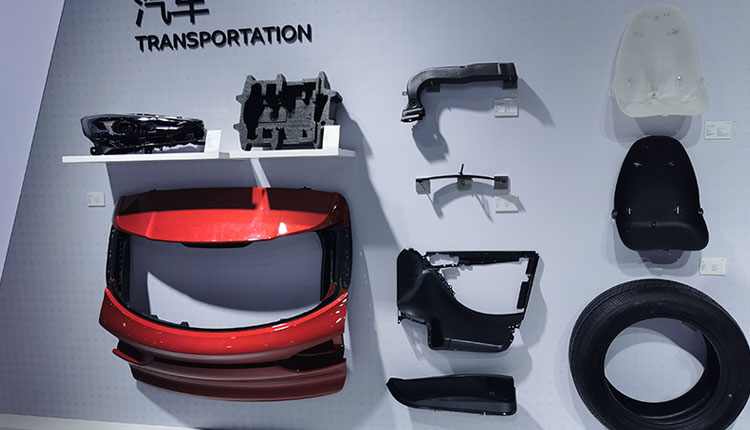
As a result of increased demand, manufacturers are developing new and more powerful battery models. In addition to the advantages, such as independence from fossil fuels and the much simpler technology compared to the combustion engine, there are also major challenges. Still some rare and expensive raw materials are required for the production of batteries. A major challenge for safety is the high energy density and the high currents, as this creates an intrinsic fire risk. In addition, more and more plastics are being used in order to reduce the weight of the vehicle and thus increase its range. Due to the intrinsic easy flammability of most plastics, the use of flame retardants is indispensable. These are contained in a wide variety of often current-carrying components. Examples include cables, high-voltage connectors, composite housings based on thermostats or thermoplastics for batteries or structural components, adhesives or high-density foams.
As the charging process is expected to take less and less time, fast charging is particularly challenging for materials. Ever higher currents are required for this purpose. A decisive requirement, for example, for the distinctive orange-colored (signal orange) high-voltage connectors is a high tracking index (CTI). Nowadays, this is measured up to 600 volts, with the wish to test at even higher voltages which the current standards does not allow for.

The housings of the massive batteries are also in focus. In earlier generations, these were often made of very heavy steel or lighter aluminum, but composite materials made of UP or epoxy resins or thermoplastics are increasingly being used. Thus, a great deal of weight can be saved and the vehicle range increased. Here, too, flame retardants are essential. Plastics are also used inside the battery, such as polyurethane pads or potting foams. If damage should cause a single cell to ignite, this prevents a fire from spreading quickly to the neighboring cells if the right flame retardants are chosen.
In summary, the new and rapid development of e-mobility places high demands on flame retardants. Nevertheless, there are good solutions on the market that can serve exactly these needs while maintaining high sustainability.
Flame retardants are flame retardant additives, and flame retardant masterbatches are flame retardant materials containing flame retardants.Shijiazhuang Qibo Technology Co., Ltd. established in 2006 in Shijiazhuang city, China, our scientific research team with full experiences in chemical filed, and participate more technical fairs organized by national education department. We devoted to supply and development of high efficient frame retardants additives and frame retardants masterbatch.