







The Function of Flame Retardant
- Postdate: 2023-03-28
- From: qibochem.com
-
The Function of Flame Retardant
- Postdate: 2023-03-28
- Form: qibochem.com
-
Flame retardants are functional additives that endow flammable polymers with flame retardancy. They are mainly designed for the flame retardancy of polymer materials. Gas asphyxiation, etc.
1 Endothermic effect
The heat released by any combustion in a short period of time is limited. If a part of the heat released by the fire source can be absorbed in a short period of time, the temperature of the flame will decrease, radiate to the combustion surface and act on the gasified gas. The heat of flammable molecules cracked into free radicals will be reduced, and the combustion reaction will be inhibited to a certain extent.
Under high temperature conditions, the flame retardant has a strong endothermic reaction, absorbs part of the heat released by combustion, reduces the surface temperature of combustibles, effectively inhibits the generation of flammable gases, and prevents the spread of combustion. The flame retardant mechanism of AI(OH)3 flame retardant is to increase the heat capacity of the polymer so that it absorbs more heat before reaching the thermal decomposition temperature, thereby improving its flame retardant performance. This kind of flame retardant gives full play to its characteristic of absorbing a large amount of heat when combined with water vapor, and improves its own flame retardant ability.
2 Coverage
After adding flame retardants to combustible materials, the flame retardants can form a glassy or stable foam covering layer at high temperature, which can isolate oxygen and have the functions of heat insulation, oxygen isolation, and prevention of combustible gas from escaping, so as to achieve flame retardancy Purpose. For example, organophosphorus flame retardants can produce cross-linked solid substances or carbonized layers with a more stable structure when heated. On the one hand, the formation of the carbonized layer can prevent further pyrolysis of the polymer, and on the other hand, it can prevent the internal thermal decomposition products from entering the gas phase to participate in the combustion process.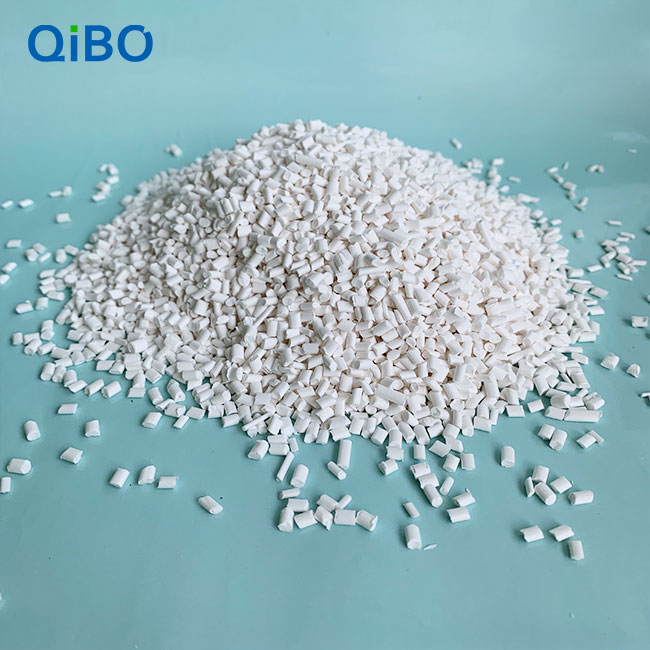
3 Inhibition chain reaction
According to the chain reaction theory of combustion, what is needed to sustain combustion are free radicals. Flame retardants can act on the gas phase combustion zone to capture free radicals in the combustion reaction, thereby preventing the spread of the flame, reducing the flame density in the combustion zone, and finally reducing the combustion reaction rate until it terminates. For example, halogen-containing flame retardants, its The evaporation temperature is the same or close to the decomposition temperature of the polymer. When the polymer is decomposed by heat, the flame retardant is also volatilized. At this time, the halogen-containing flame retardant and the thermal decomposition product are in the gas phase combustion zone at the same time, and the halogen can be captured in the combustion reaction. The free radicals interfere with the chain reaction of combustion.
4 Asphyxiation effect of non-combustible gas
When the flame retardant is heated, it decomposes into non-combustible gas, and dilutes the concentration of combustible gas decomposed from combustibles to below the lower limit of combustion. At the same time, it also has the effect of diluting the oxygen concentration in the combustion zone, preventing the continuation of combustion and achieving the effect of flame retardancy.
The vast majority of polymers are composed of hydrocarbons and other meta-toxic substances, which are highly flammable. During the combustion process, it is a complex chain reaction process of free radicals, which will release a large amount of heat energy, causing direct damage and rapidly increasing fire.
Shijiazhuang Qibo Chemical Co., Ltd. has been focusing on the production of high-quality flame retardants in China for about 16 years. Our flame retardants have excellent flame-retardant effects. Products produced using flame retardants can achieve the effect of self-extinguishing when away from fire. Meets UL standards.