





Factors Affecting Flame Retardancy in Polyolefins
- Postdate: 2023-02-16
- From: qibochem.com
-
Factors Affecting Flame Retardancy in Polyolefins
- Postdate: 2023-02-16
- Form: qibochem.com
-
Factors Affecting Flame Retardancy in Polyolefins
1 Plastic resin
1.1 The lower the melt index of the plastic resin itself, the more the amount of flame retardant used; the higher the melt index, the less the amount of flame retardant used.Among PE or PP plastics, products with a melt index of 0.5-1.0 have the worst flame retardant effect, and the amount of flame retardant is 5-10% more than that of products with a melt index of 5-7.The reason is that plastics with a higher melt index are prone to dripping when they catch fire, taking away more heat and reducing the surface temperature of the plastic.
1.2 The mixed use of several plastic resins or due to the processing equipment causes the local dispersion of the flame retardant masterbatch in the polymer to be poor, which affects the flame retardancy.
1.3 Recycling is mixed with different types of plastics and fillers, all of which have varying degrees of impact on flame retardancy.
2 Masterbatch and additives
2.1 When the masterbatch contains calcium carbonate, magnesium carbonate, silicon powder and other fillers, it will seriously interfere with the flame retardant and destroy the formation of the oxygen barrier layer on the plastic surface.
2.2 Certain lubricants used in the production of masterbatches can also interfere with flame retardants. For example, zinc stearate and zinc oxide will form a barrier layer on the surface of flame-retardant plastics, destroy the formation of the oxygen barrier layer, and play a role of interference barrier.
2.3 There are some additives that have an antagonistic effect on 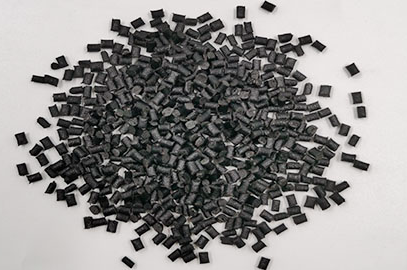 flame retardancy.For example: calcium powder is used as filler in black masterbatch, and zinc stearate is used as lubricant, because calcium powder contains magnesium carbonate, which seriously interferes with the flame retardant effect, and zinc stearate will also destroy the formation of the carbonized layer on the plastic surface. Even if more flame retardant masterbatches are added, there is no flame retardant effect.
3 Filler
3.1 The "wick effect" of the filler improves the thermal conductivity of the plastic, increases the internal temperature of the plastic, accelerates the decomposition of the plastic, and releases more volatile combustible substances.
3.2 The filler increases the viscosity of the plastic and reduces the heat taken away by the flow and droplet of the plastic. Untreated fillers have extremely poor compatibility with plastics, which will lead to uneven plasticization of the entire formulation system and reduce the flame retardant effect.
4 Product shape, thickness and processing equipment, technology
4.1 For 94UL-VI-V2 flame retardant products, the greater the thickness, the greater the amount of flame retardant masterbatch.
4.2 For 94UL-V0 flame retardant products, the greater the thickness, the smaller the amount of flame retardant masterbatch.
4.3 The screw length, arrangement, gap size, stirring, feeding, temperature setting, extrusion speed and other processes have a great influence on the dispersion of flame retardant masterbatch. Poor plasticization will increase the amount of flame retardant masterbatch and reduce the plastic performance.
Shijiazhuang Qibo Chemical Co., Ltd. specializes in the production of flame retardant masterbatches for 16 years. Our company's masterbatches are treated with polymer activation, and have excellent compatibility, dispersion, weather resistance, and thermal stability.